Projects / MiniRockets, MF39 Velocity Raptor
MF39 Velocity Raptor, from design to C'Space 2025
- Length
- 840 mm
- Mass
- 1.37 kg
- Team
- 5 people
- Flight
- July 8, 2025
Project manager of MF39 in 2024-2025, after a first year on another MiniRockets rocket.
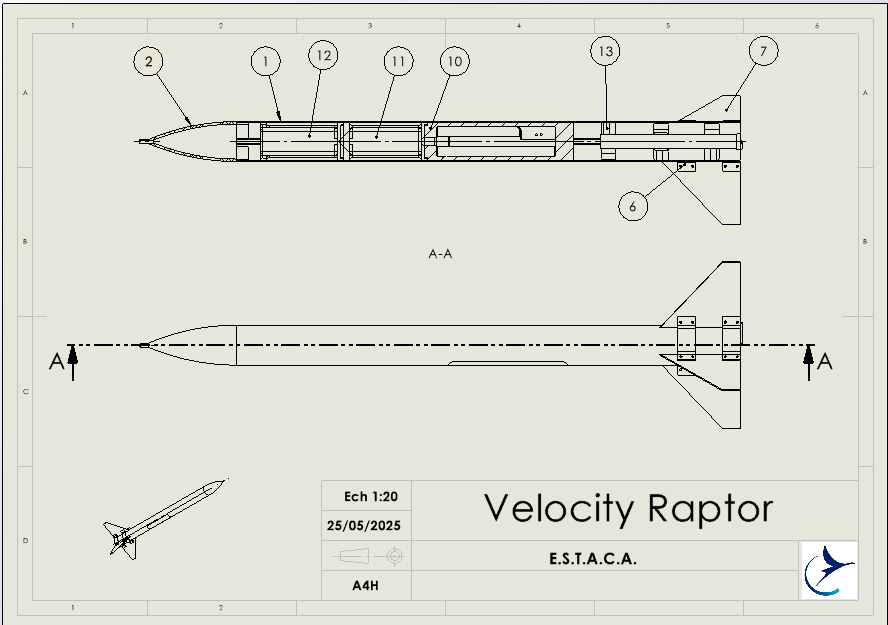
2023-2024, a first rocket
My first year in MiniRockets was on another rocket, for which I built the flight timer on a breadboard. That rocket was abandoned before it flew.
2024-2025, MF39 Velocity Raptor
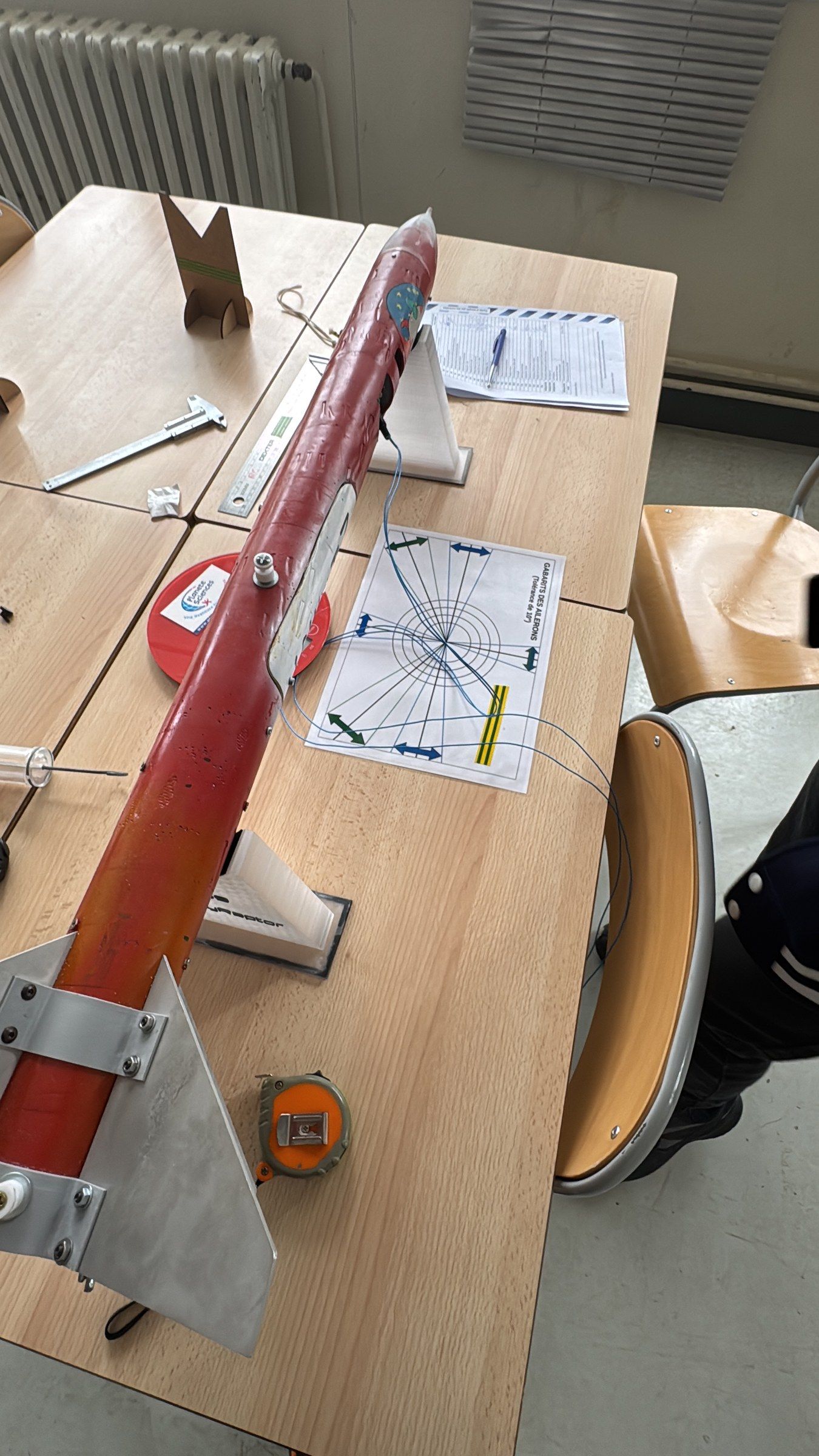
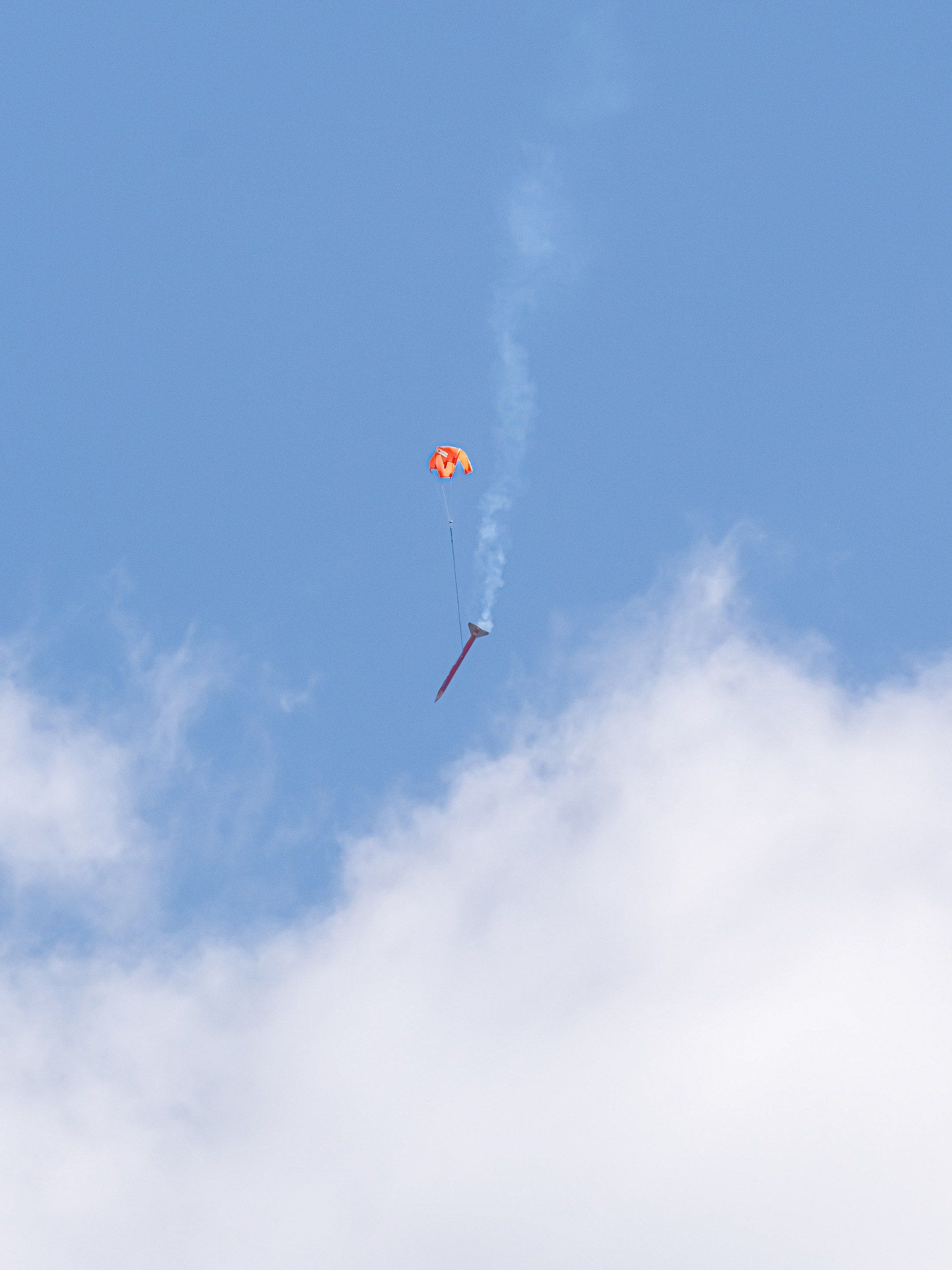
The next year we started a new rocket, MF39 Velocity Raptor, and I became its project manager. MF39 is a small sounding rocket that was meant to measure its own velocity, with an experiment that in the end stayed on the ground. 840 mm glass fiber skin made by the team, 1.37 kg, Pandora Pro 24-6G motor.
My part
I led the five-person team and contributed to CAD, electronics, code and soldering.
Integration first
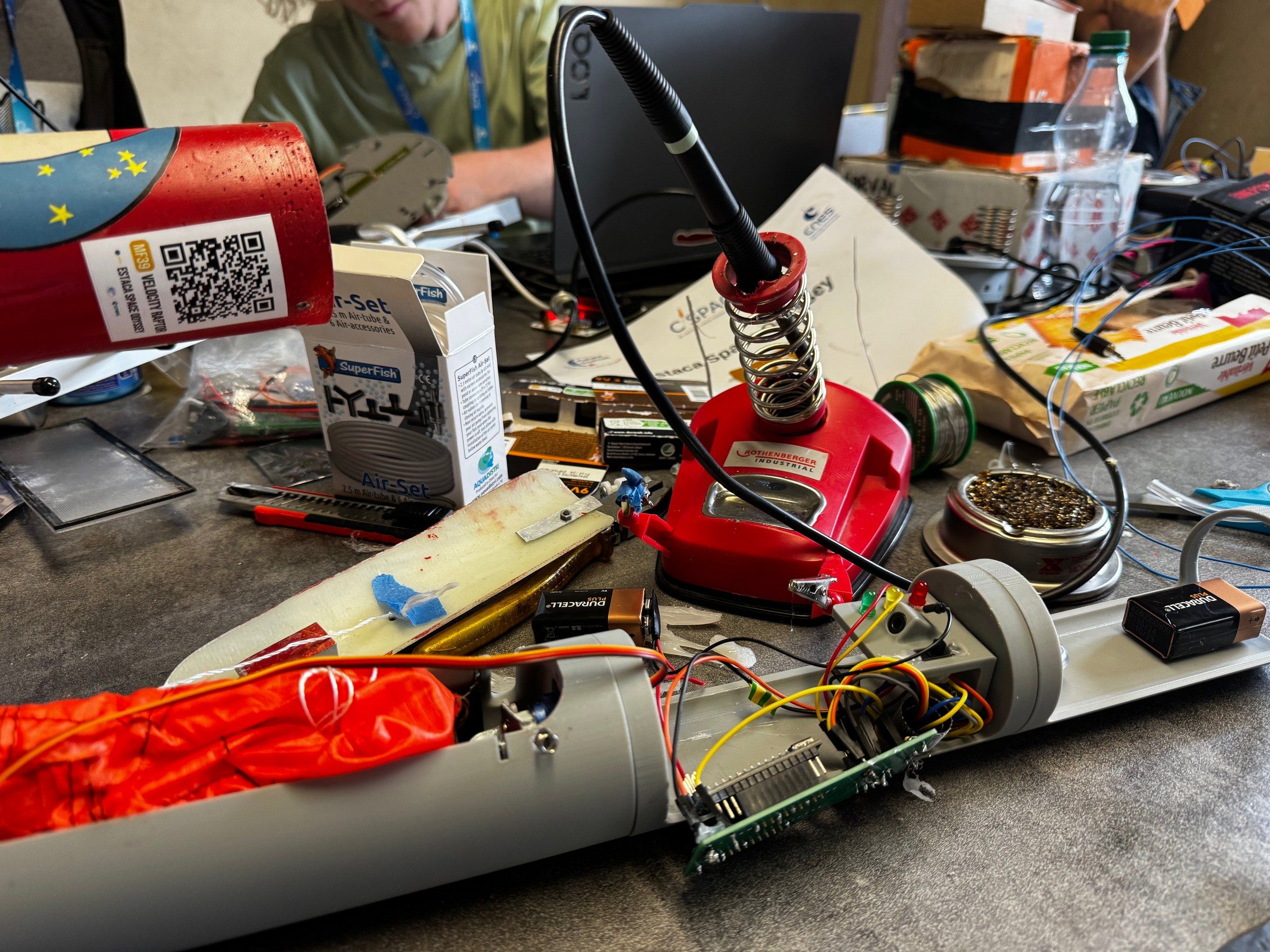
The internal structure slides in and out, so that every subsystem can be pulled out and put back without taking the rest apart.
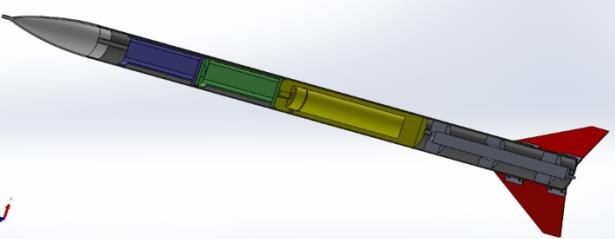
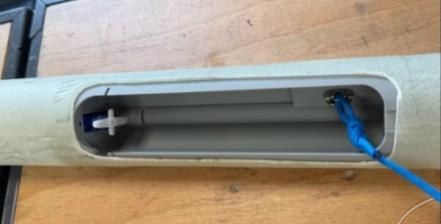
Pitot experiment, did not fly
I designed an onboard experiment to measure static and dynamic pressure with a Pitot tube sized for the rocket, running a C++ program adapted from the ESL avionics software. At C'Space, the board and code were ready but untested, so we chose to focus on the rocket and its recovery system. MF39 flew without the experiment.
C'Space 2025
On site
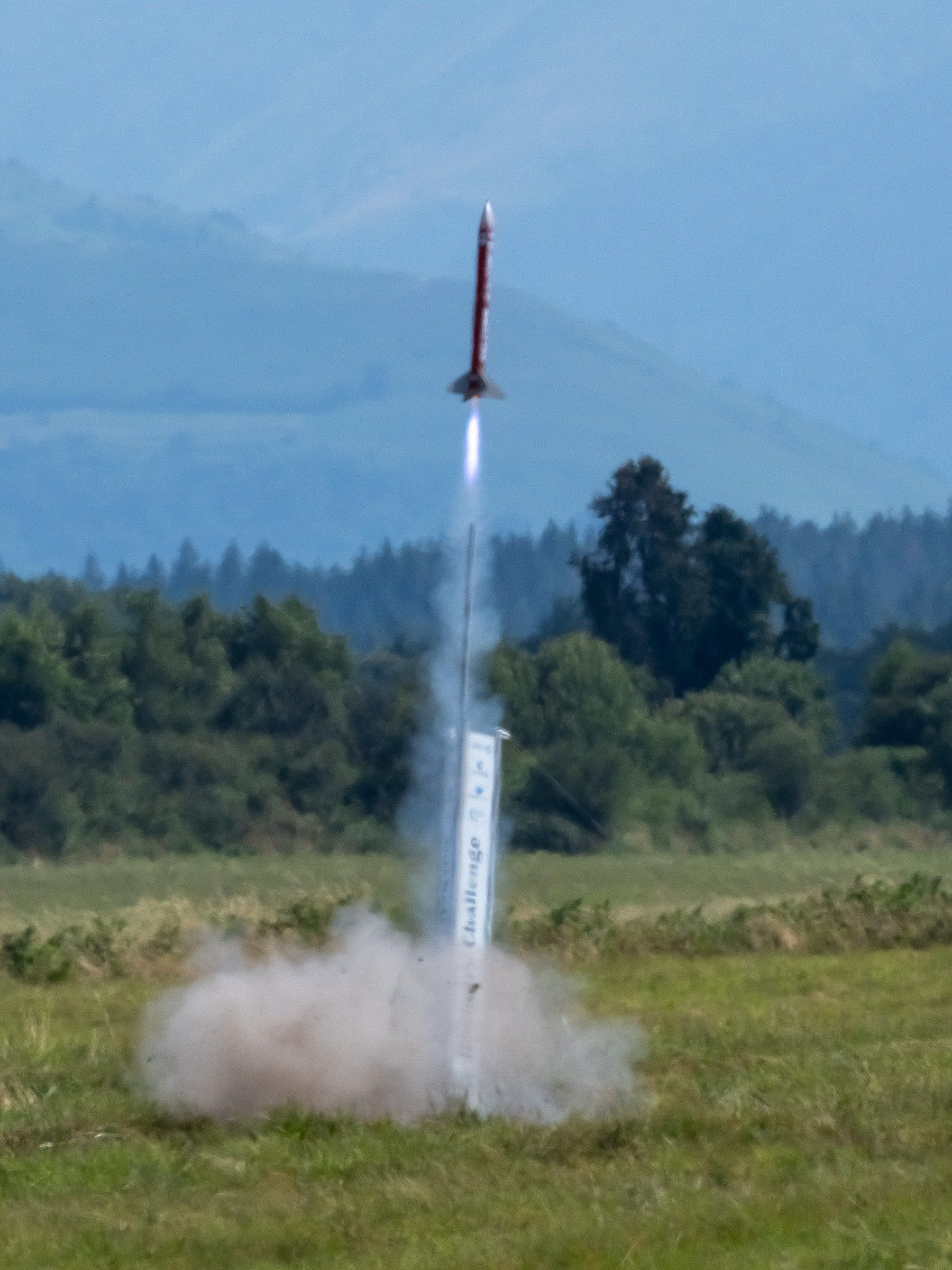
I was at C'Space 2025 to launch MF39, while the ESL-1 team prepared their own flight. The aim was to qualify as early as possible.
The fault
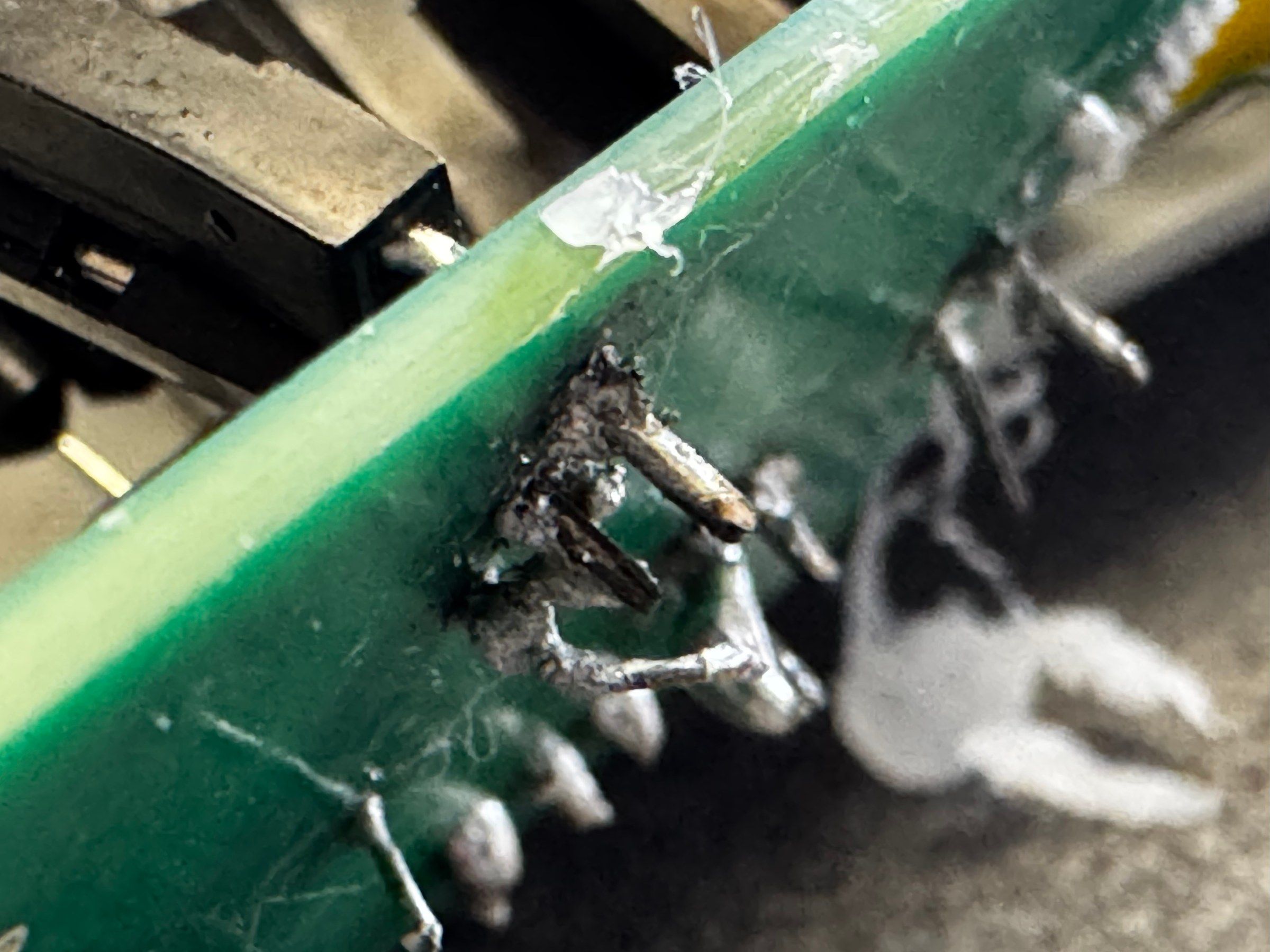
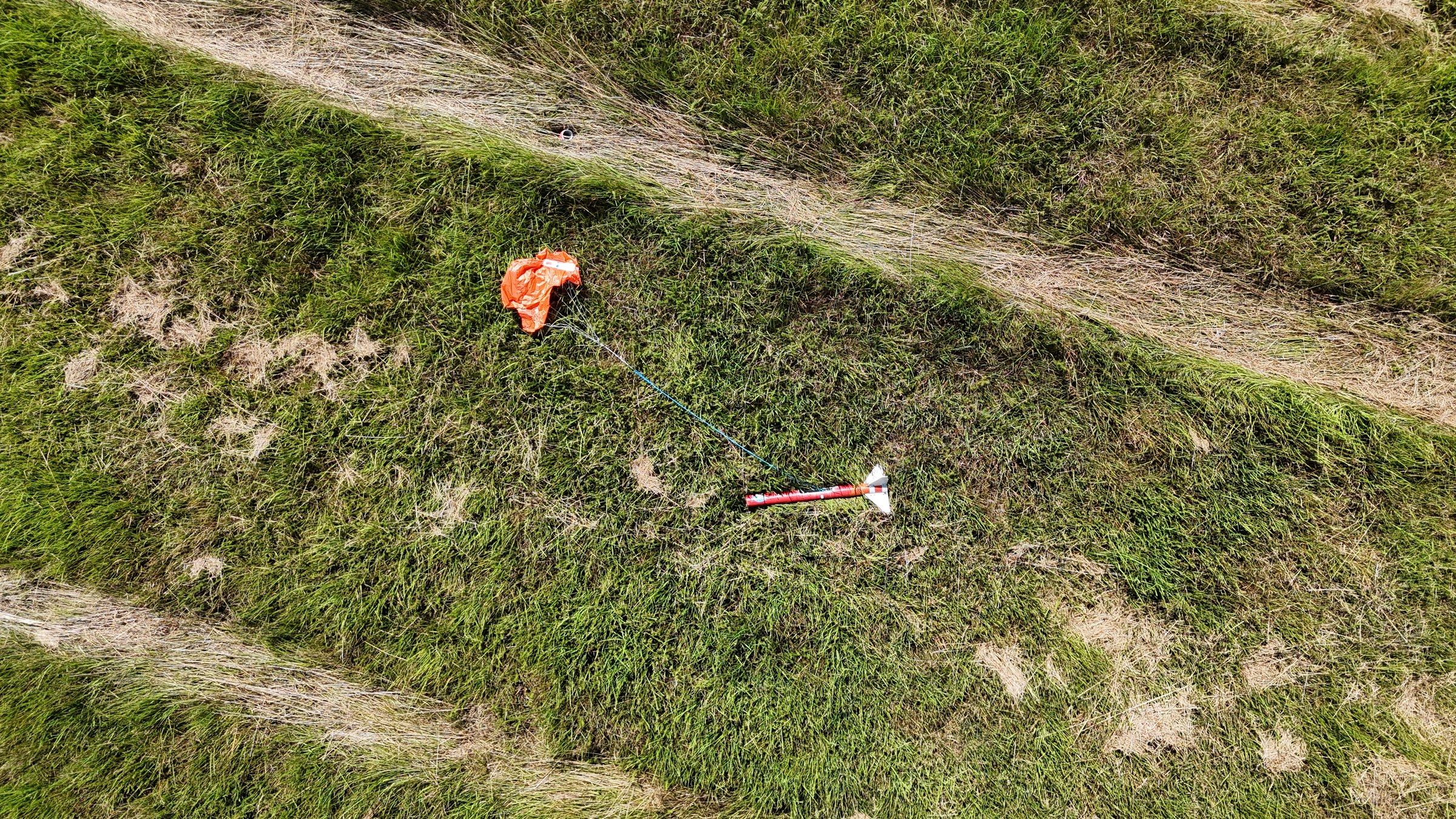
After qualification, MF39 failed its verification checks. To isolate the fault, I reworked the onboard board and code and swapped the Arduino, then went over the wiring closely and found intermittent contacts. I redid the solder joints, the rocket was qualified again and flew nominally the next day.
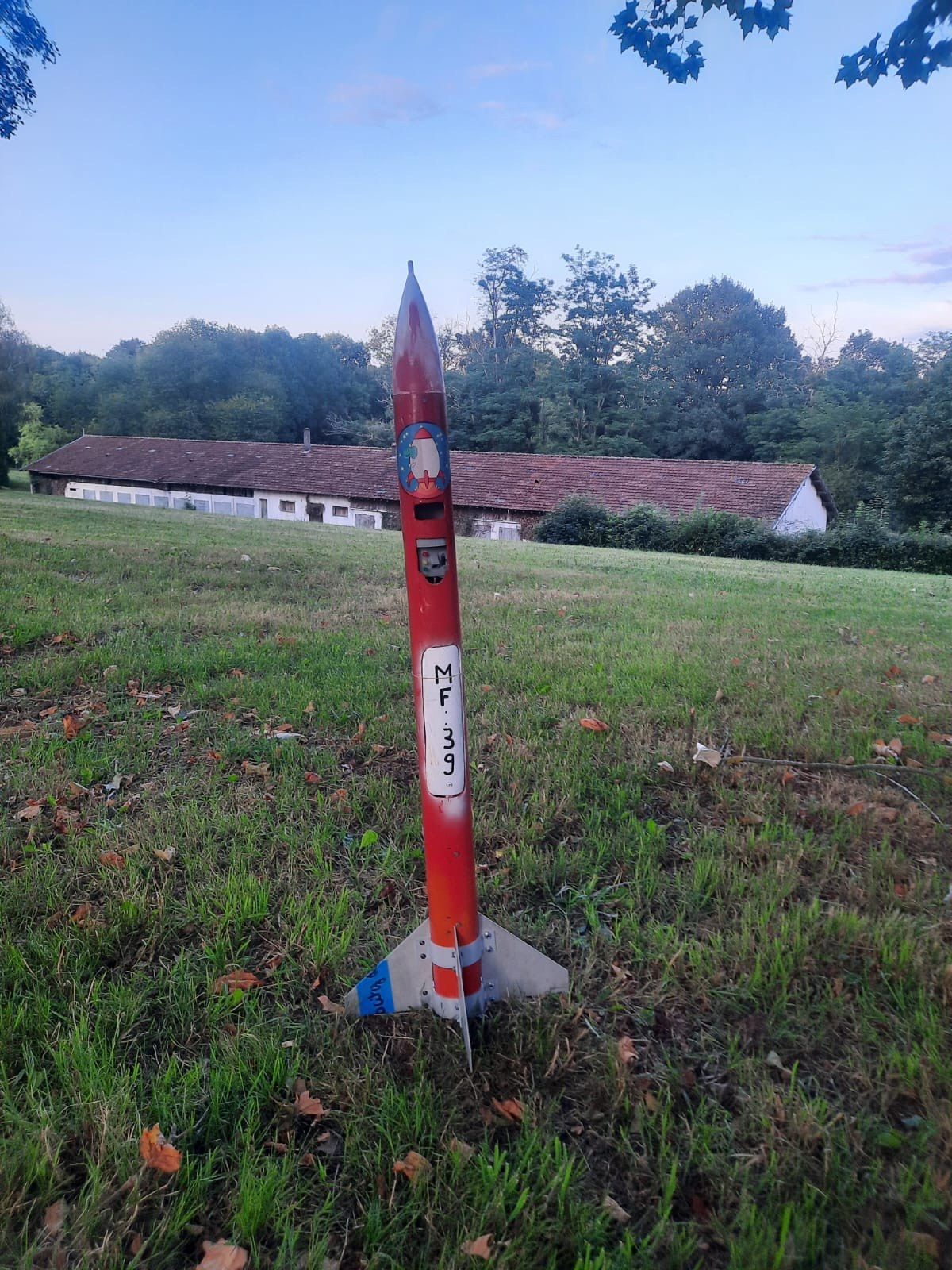
© 2025 CNES Planète Sciences
© 2025 CNES Planète Sciences
© 2025 CNES Planète Sciences