Projects / ESL-2
ESL-2 recovery system, from design to prototype
- Annular volume
- 25 mm thick
- Diameters
- 200 outer 150 inner, mm
- Main parachute
- 10 m²
- Locking
- 6 axial pins
- Team
- 5 people, 9 months
- Budget
- EUR 400
I was the recovery team project manager. I did all the CAD, managed the budget, handled integration and represented the project at society meetings. The team built and assembled the prototype together.
- Constraint
- A 25 mm thick annular volume that must still clear a 10 m² parachute
- Design
- Catapult ring on linear rails, nose cone held by 6 pins released by actuators
- Build
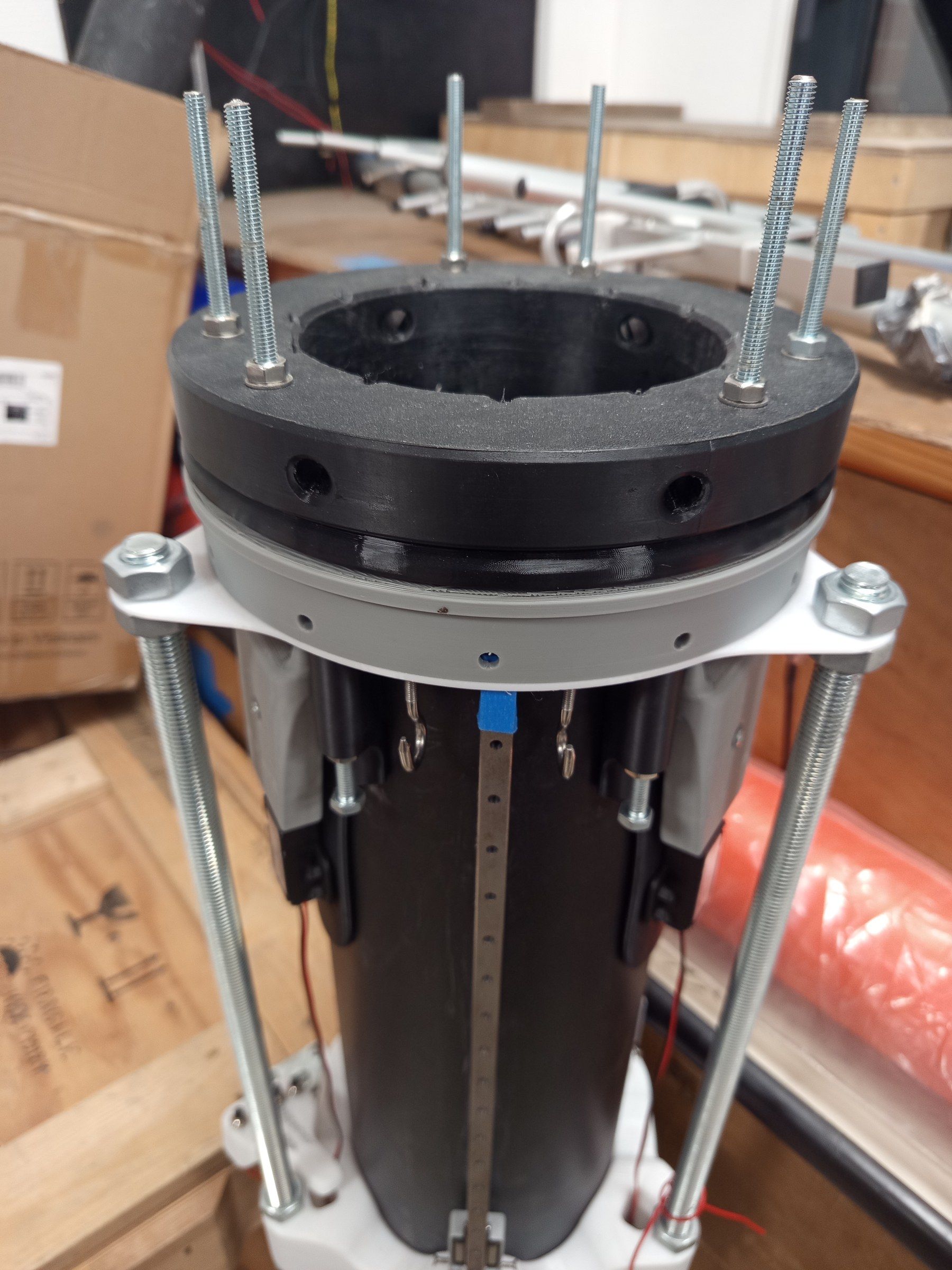
- Machined steel tube, PETG and nylon parts, assembled and integrated
- Result
- Bench ejection test passed
- Next
- Containment bag being made, qualification and integration tests in 2026-2027
Context and constraints
Starting point
ESL-1 flew on July 11, 2025, reaching about 2,800 m apogee. With the team, I analyzed the flight from onboard video and axial accelerometer data in Excel. The main parachute deployed early, which we traced to the nose cone opening shock. Planète Sciences had also flagged excessive nose cone rocking, caused by a shoulder that was too short and by large clearances.
We took over the recovery system as a PITA, the supervised year-long team project of the third year at ESTACA.
Constraint
The lengthened shoulder made a full redesign of the nose cone ejection necessary. The mechanism had to fit into a 25 mm thick annular volume, 200 mm outer diameter and 150 mm inner diameter, and still clear a 10 m² parachute.
The ESL-1 flight we analyzed. Downward camera up to apogee, then upward camera for the ejection.
Design
Principle
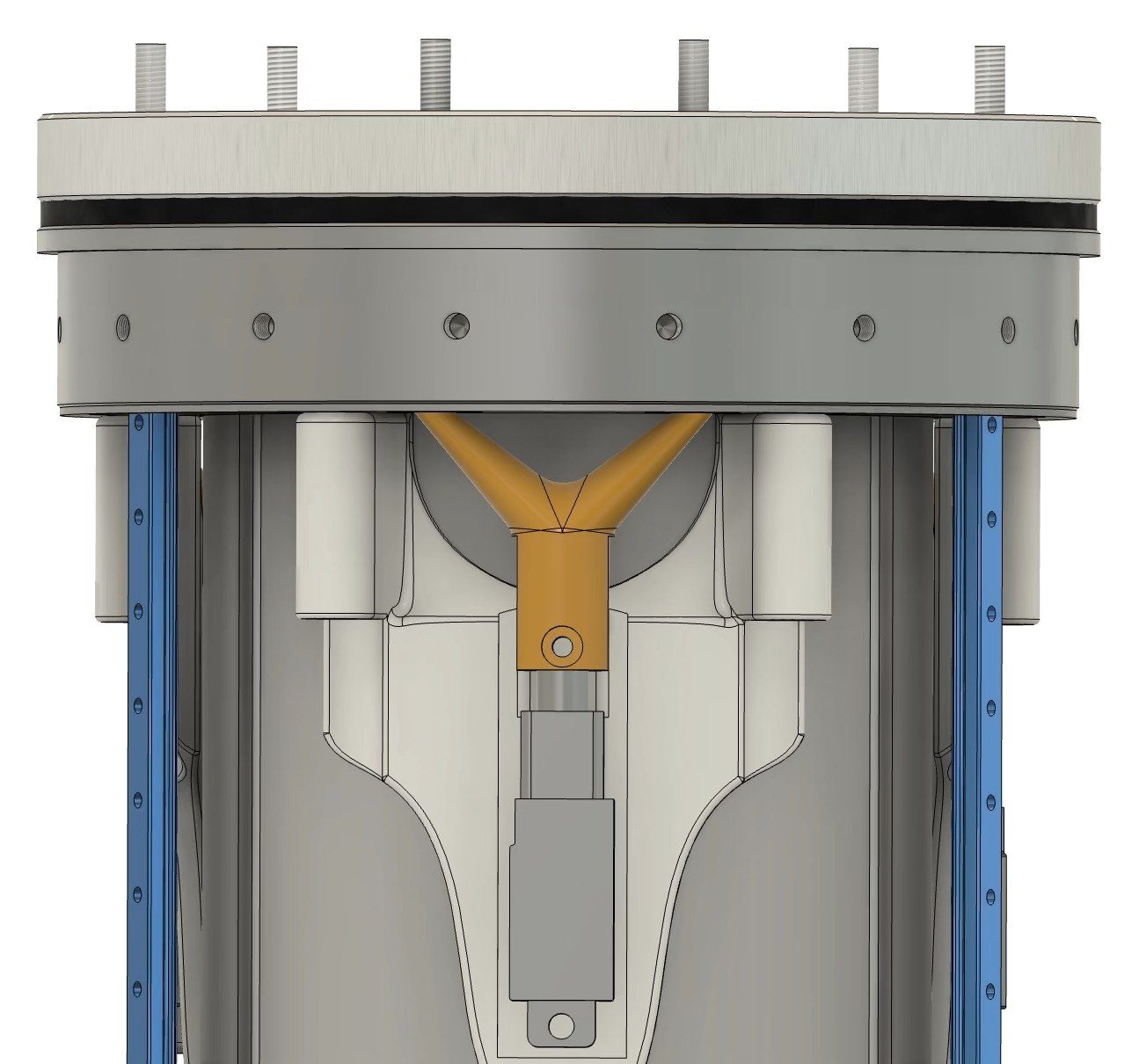
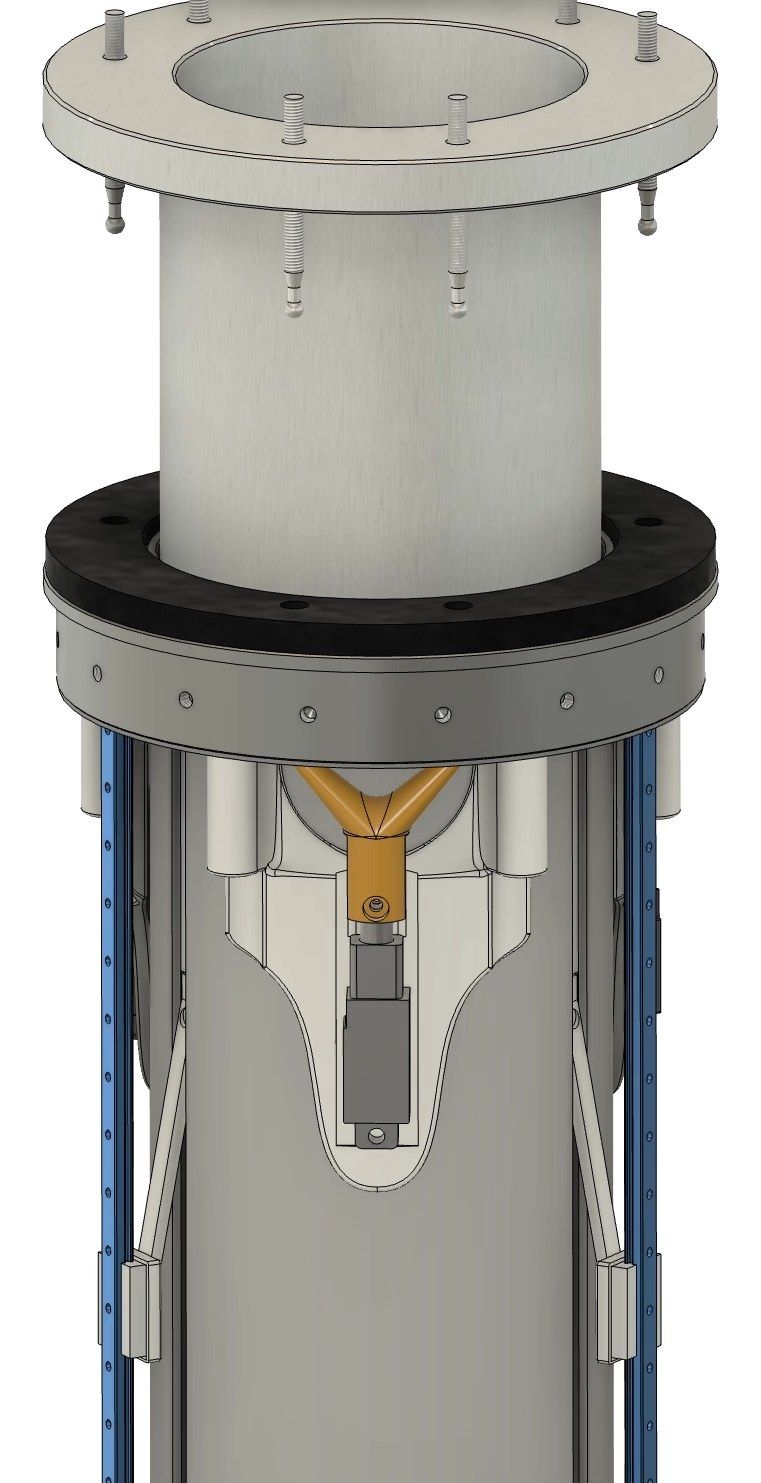
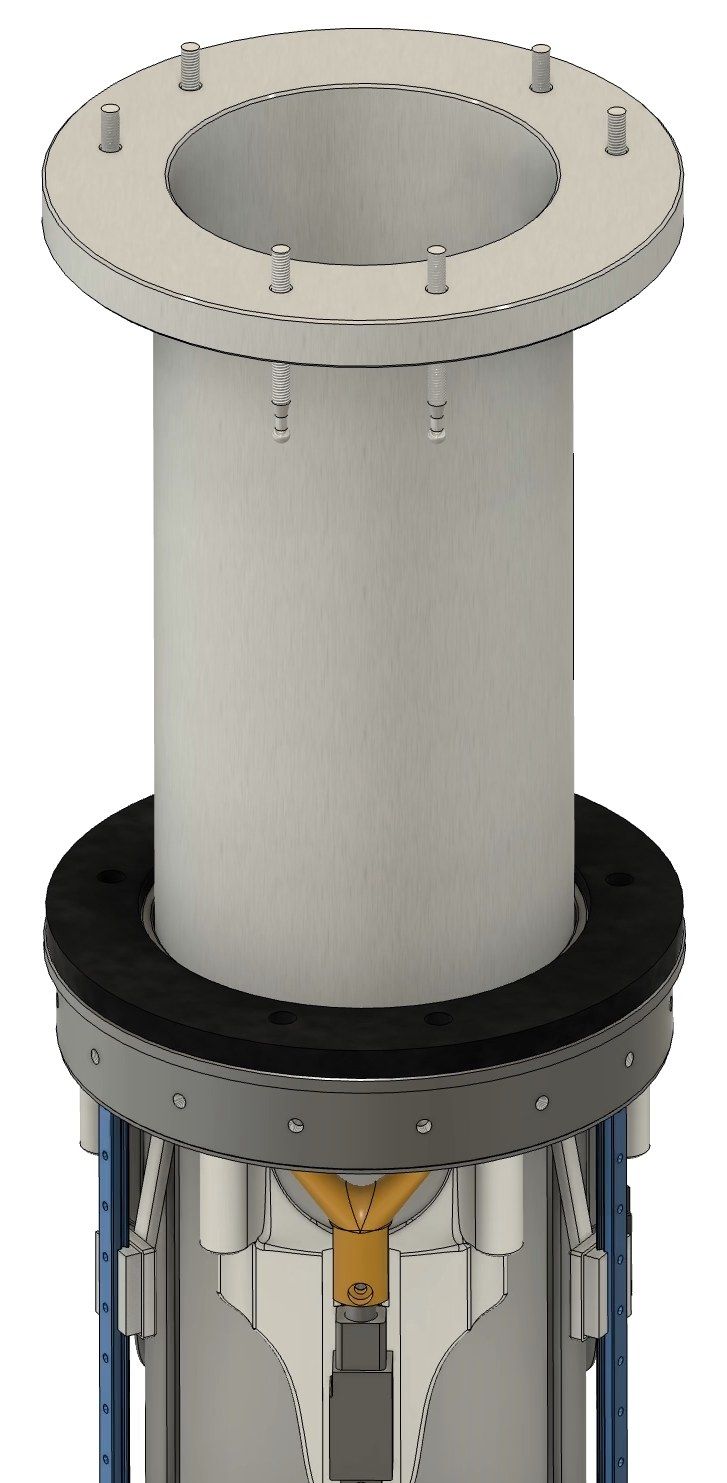
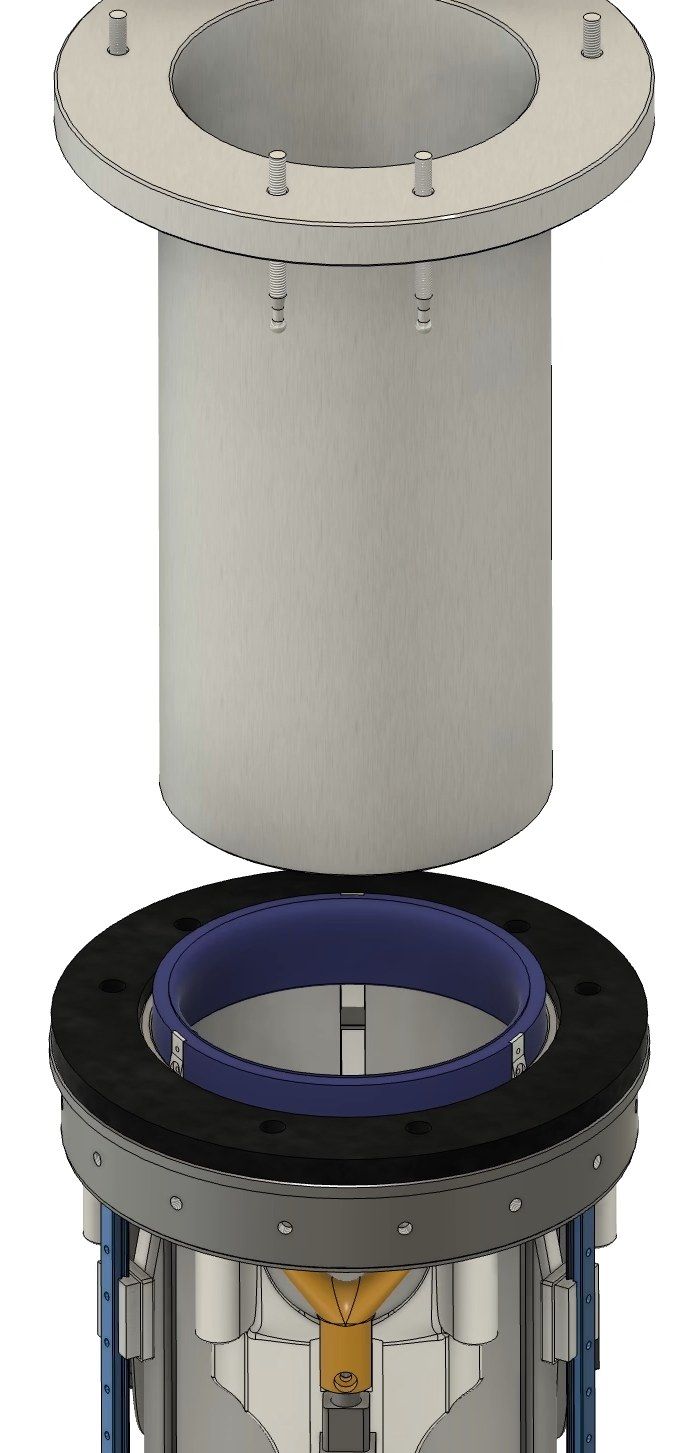
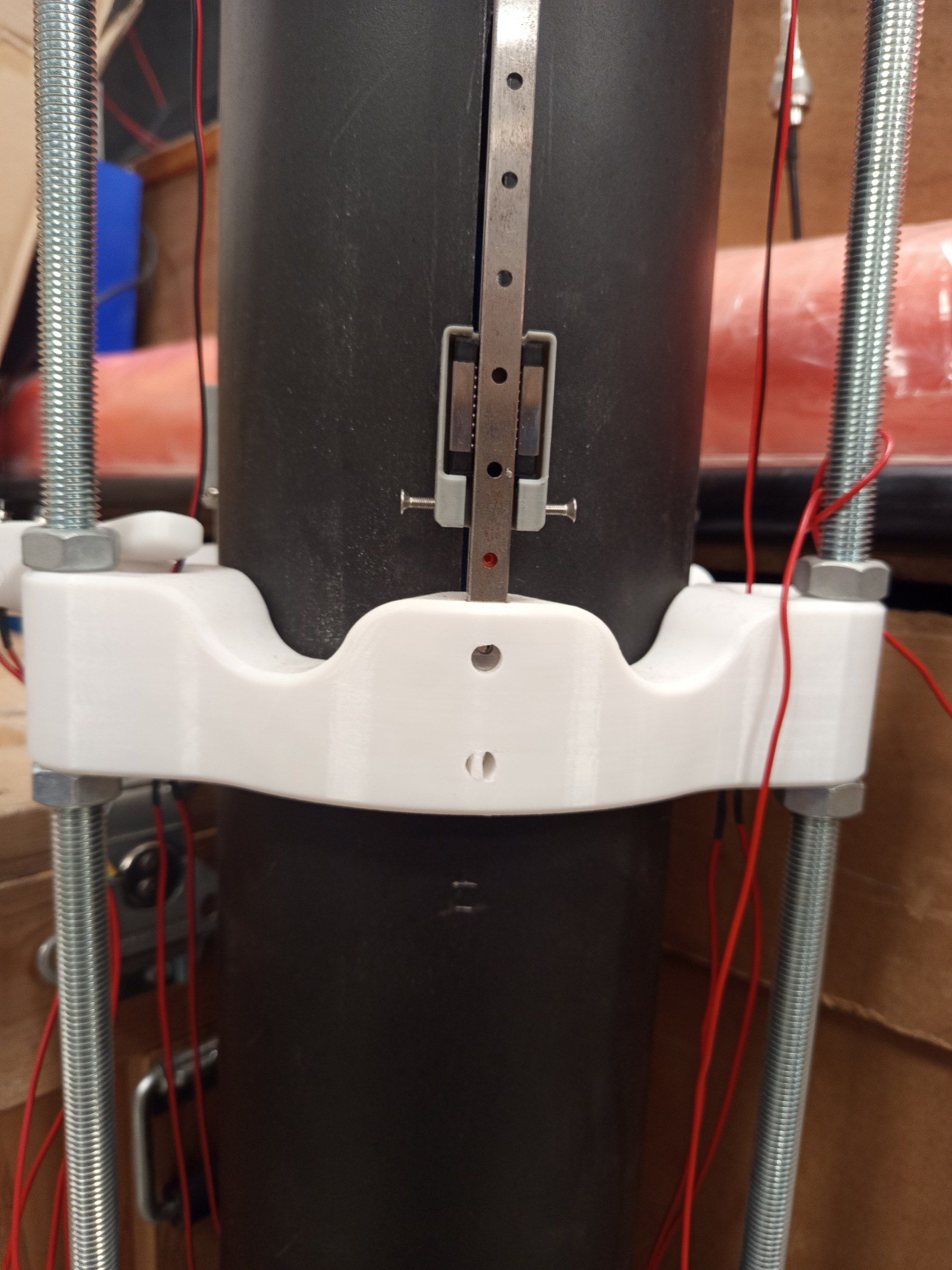
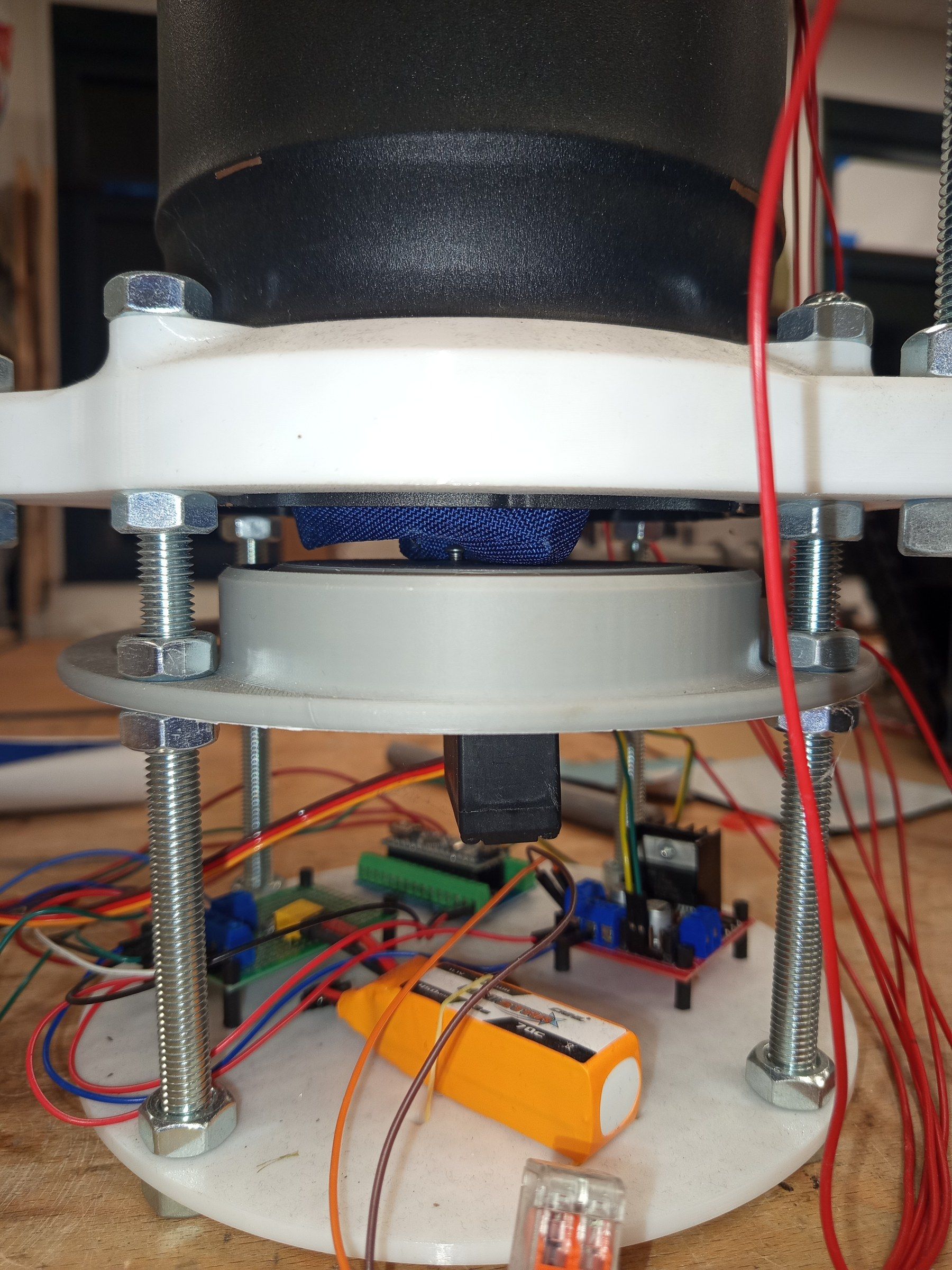
A spring-loaded catapult ring guided on linear rails pushes the nose cone out. Until then, the nose cone is locked by 6 axial pins released by electric linear actuators. The main parachute is packed in a fabric bag closed by petals held by a cord, opened on command by a servo that winds the cord onto a drum. Detailed CAD in Fusion 360.
Sizing
Spring stiffness sized in MATLAB from a force balance, chosen for a clean ejection without excessive exit velocity. The catapult ring is loaded in compression against the locked nose cone.
Failure modes first
Before freezing the design, I looked for the configurations that could make it fail. The linear rails guide the ring to limit the risk of binding. The lock stays closed without power. The actuators are powered only for release, which reduces the risk of an unintended opening after a board reset under liftoff vibration.
Interface ring
The interface ring was one of the key parts of the project. On ESL-1 it had been 3D printed in plastic, and we were asked to make it machinable.
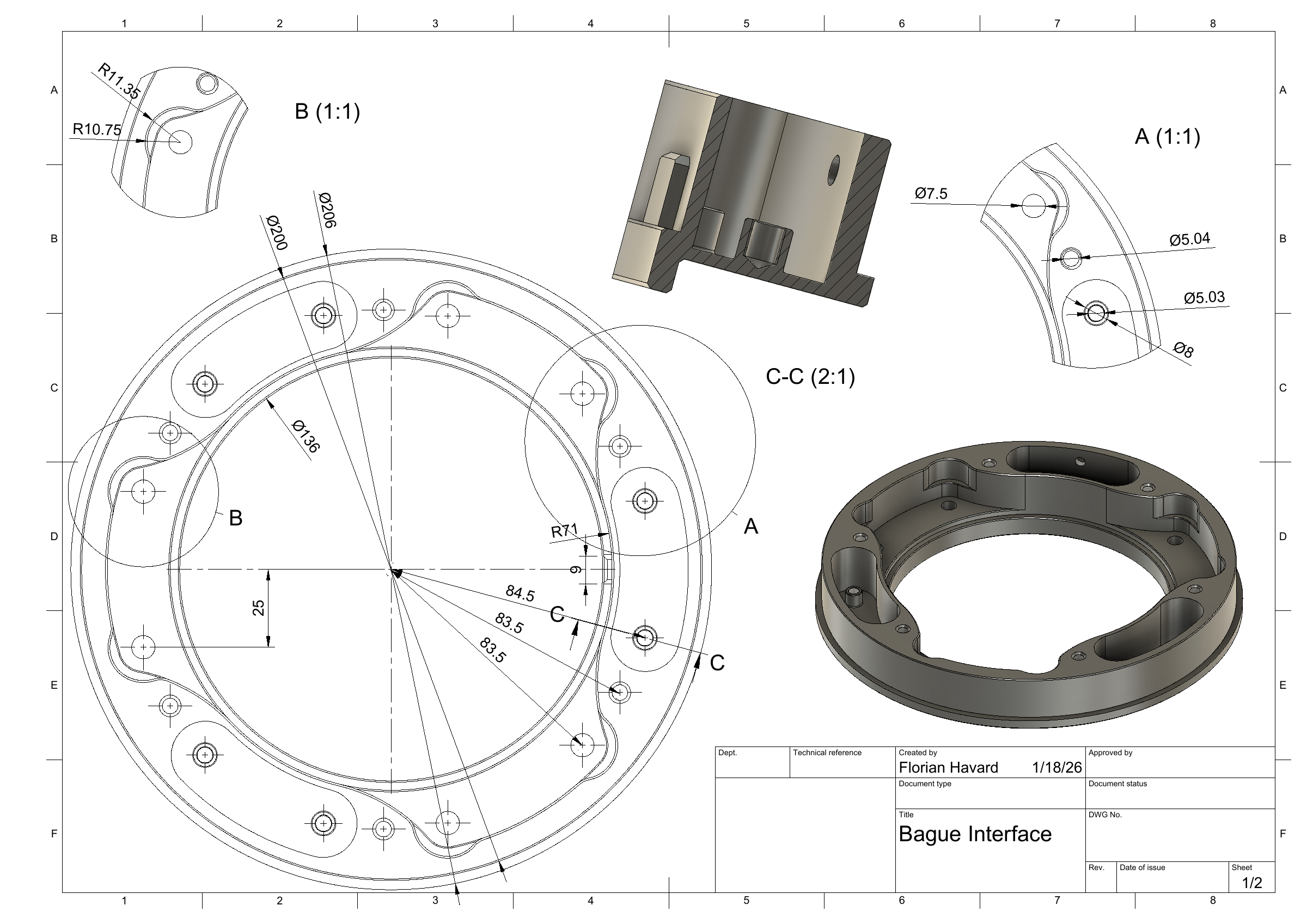
Machining simulation of the interface ring in Fusion 360
Build
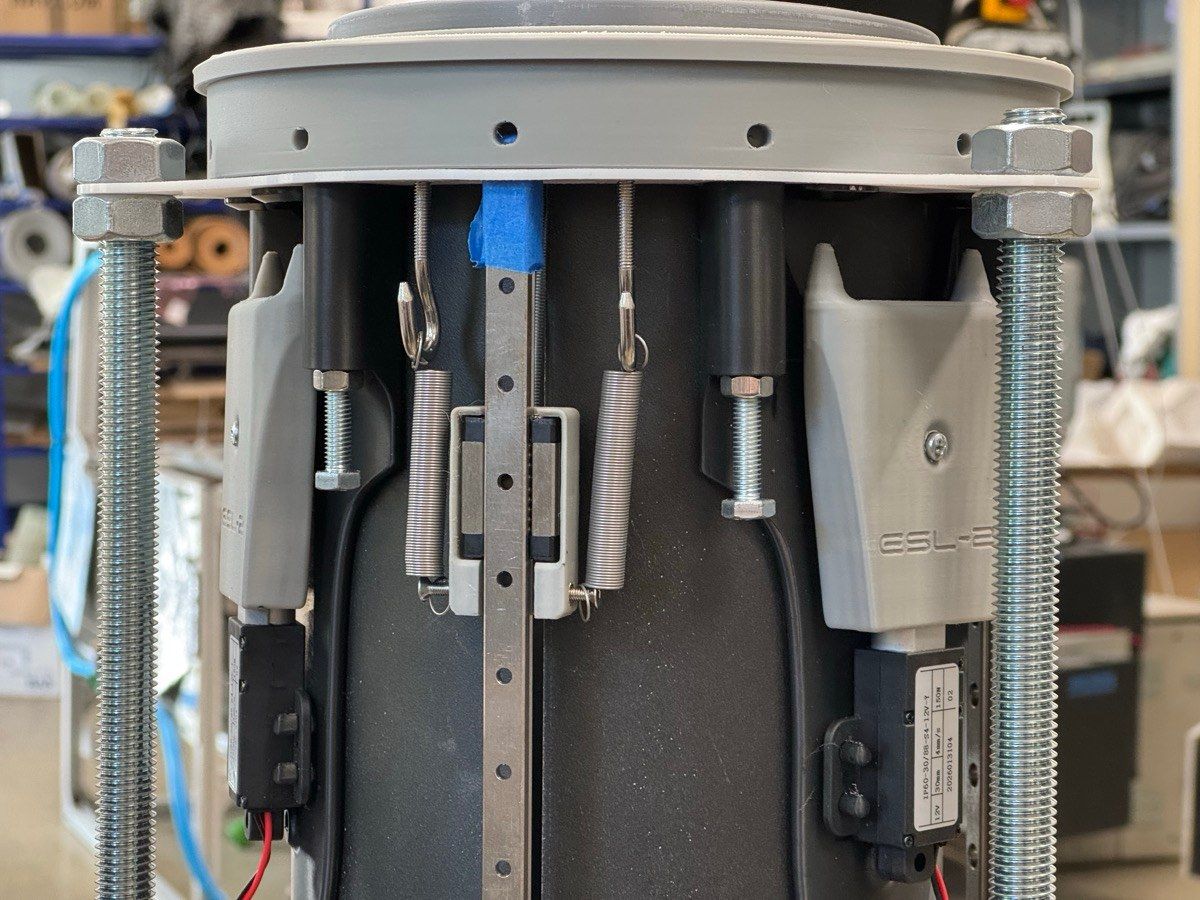
Machined steel tube and PETG and nylon printed parts, then assembly and integration. The three large threaded rods belong to the bench frame only. The rings are at the 200 mm nominal diameter, ready to receive the carbon composite skin.
Tests
First assembly
Most subassemblies worked the first time.
Issues found and fixed
Some clearances were too tight and were fixed by reprinting or sanding. One actuator mount was under-constrained. Its push finger drifted off axis and bore on the frame, leaving the nose cone locked. The mount was corrected, and the current prototype completed a bench ejection test. We counted it as passed once the nose cone came fully out several times in a row.
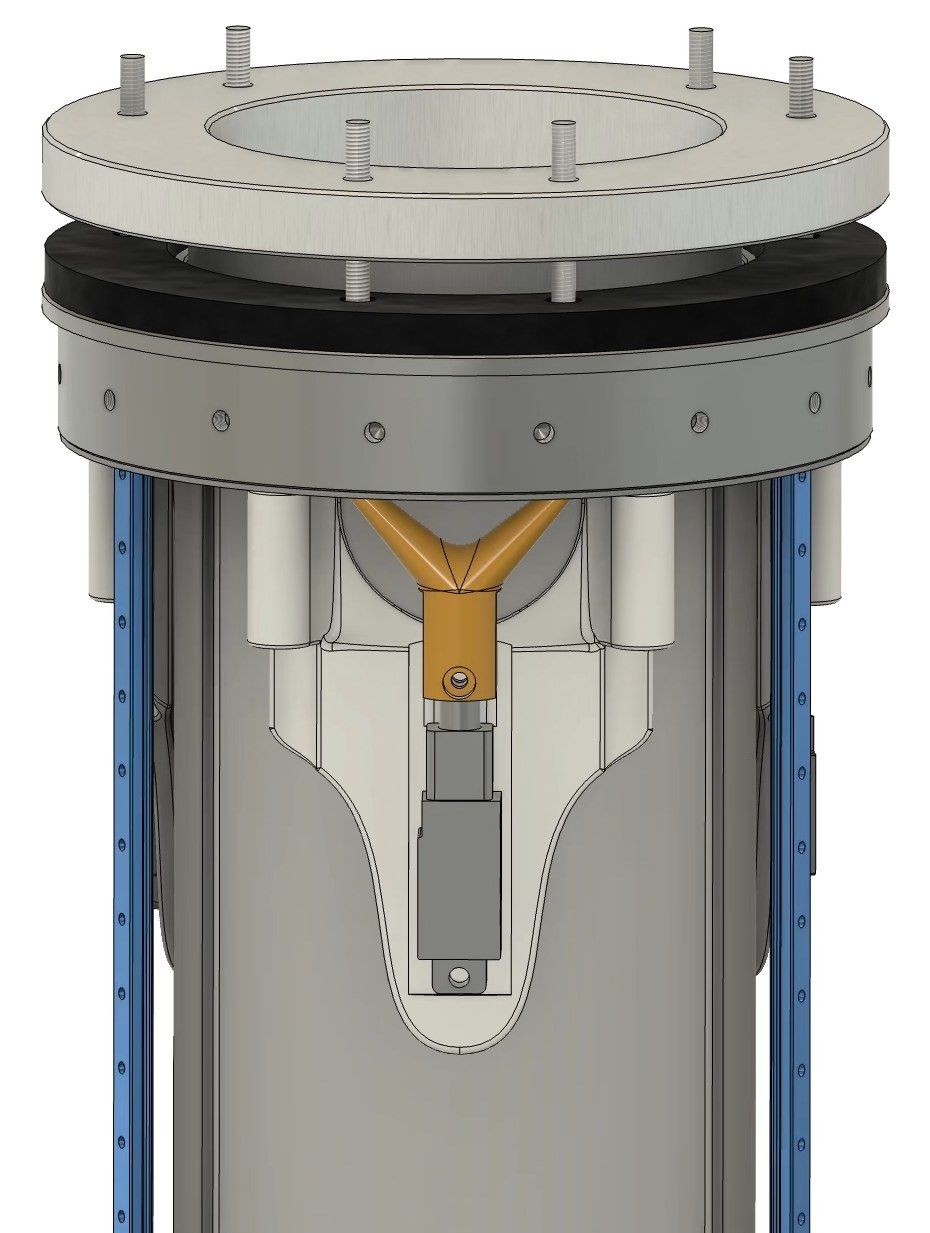
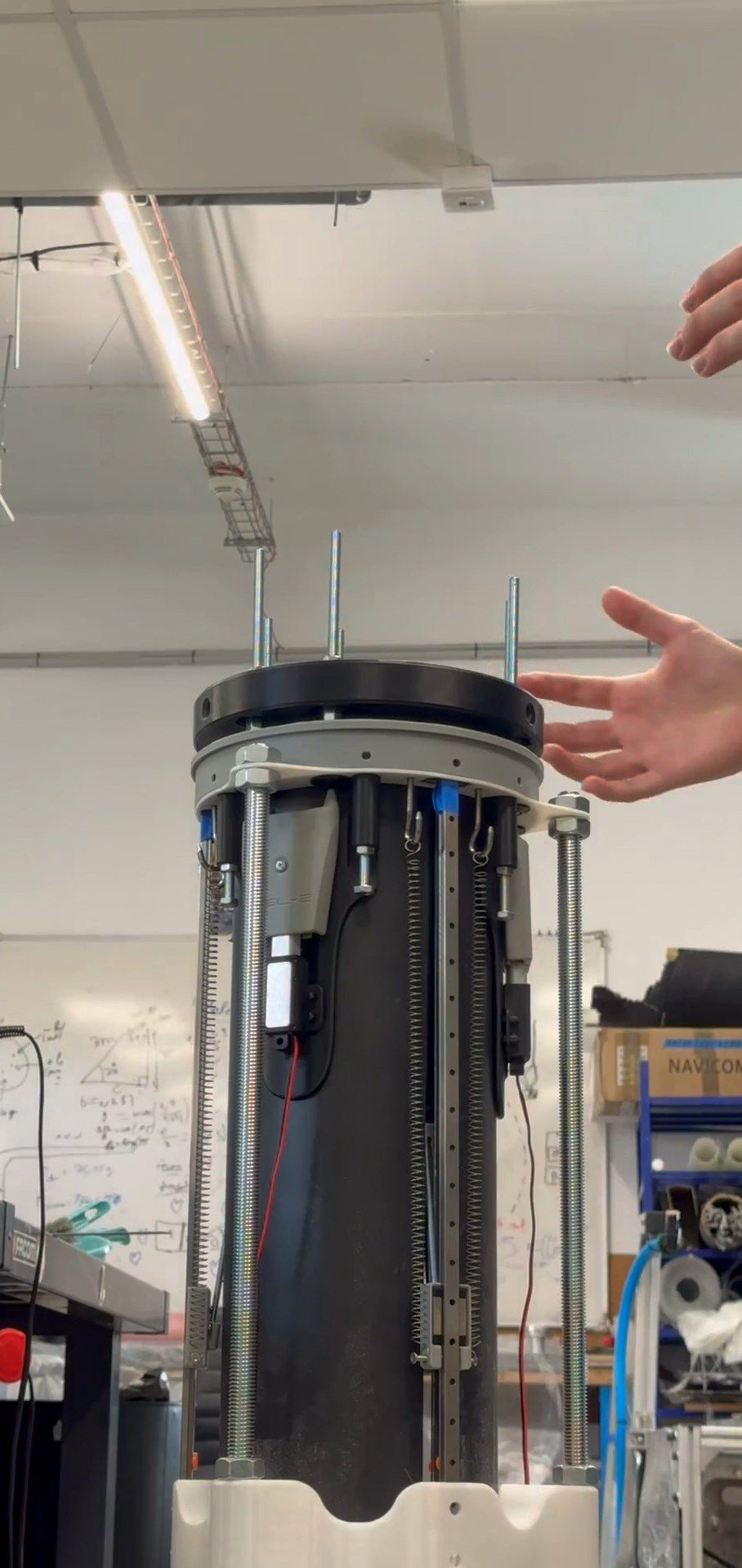
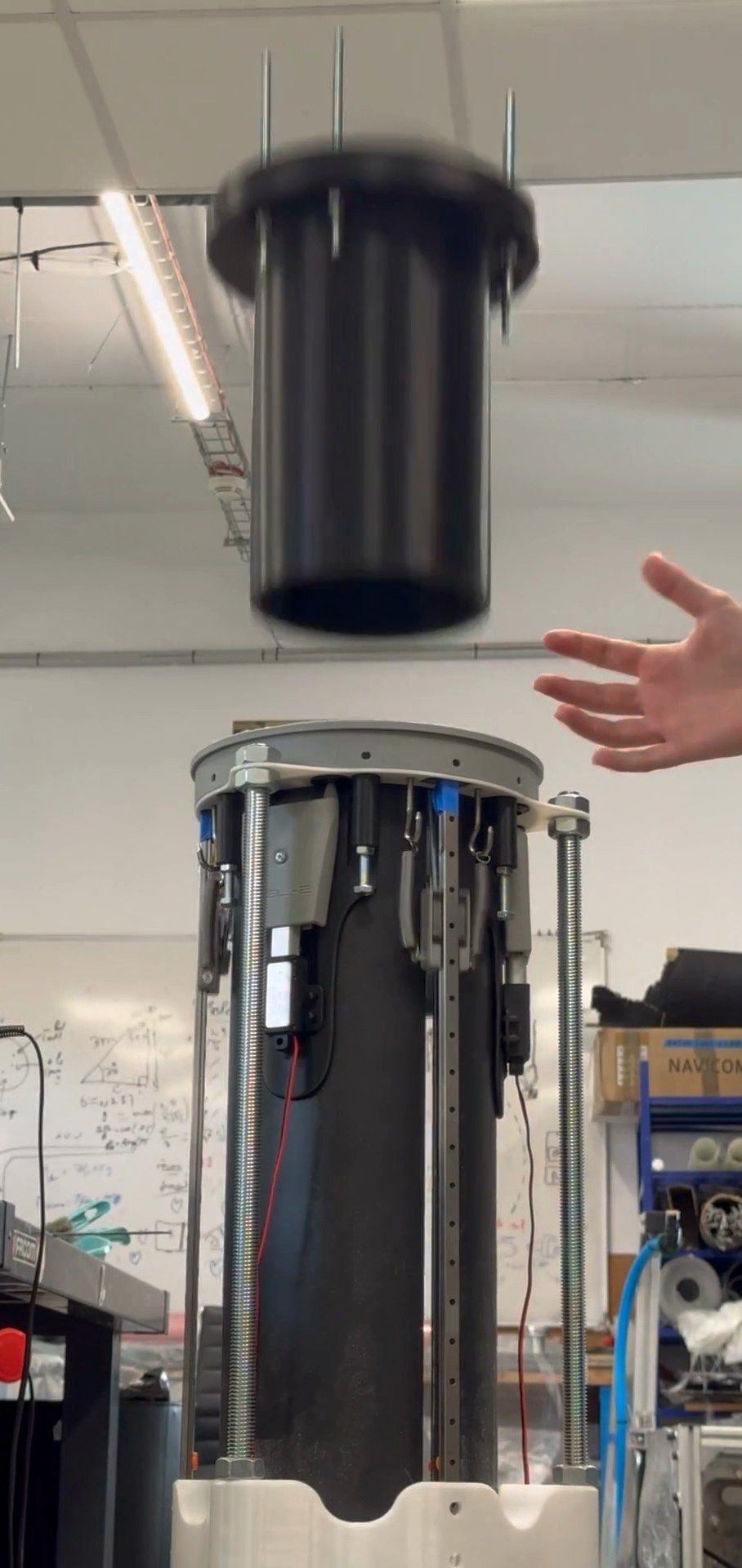
Same mechanism, as designed in Fusion 360 and as built. Prototype frames from the ejection test video of May 9, 2026.
Current status
The parachute containment bag is being made. The parachutes will be made once the final mass of the rocket is known. Full ground ejection, structural and integration tests remain planned for 2026-2027.