Projects / Mission analysis, Artemis II in GMAT and KSP
Mission analysis, Artemis II in GMAT and KSP
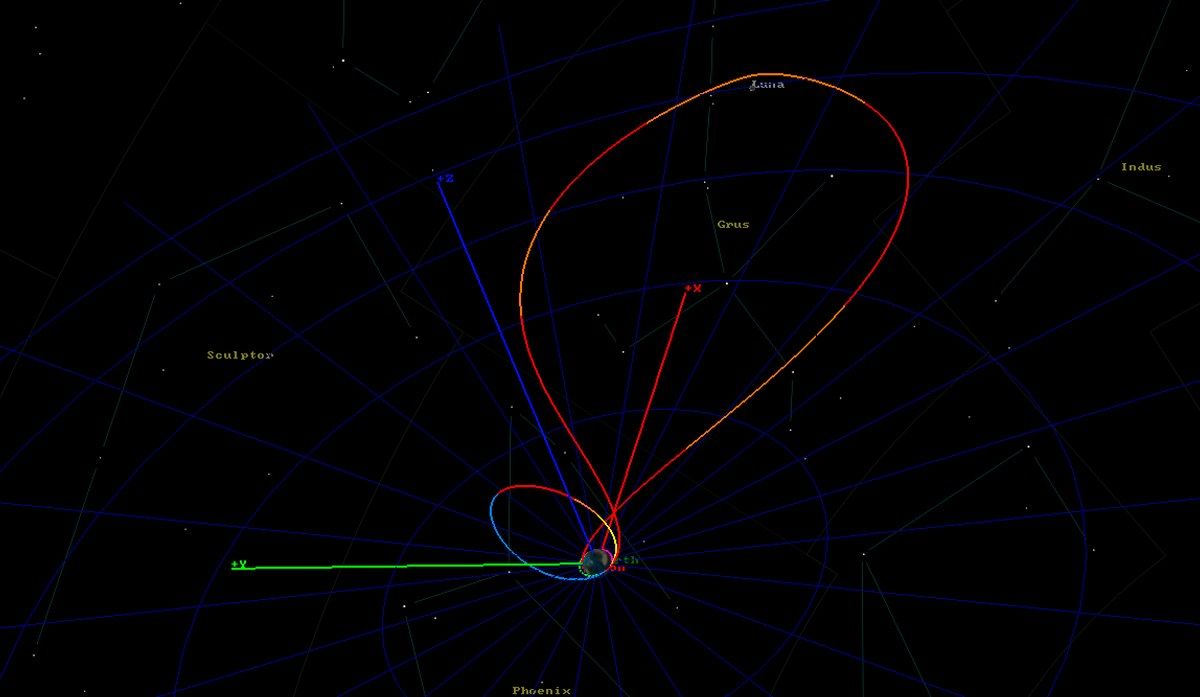
3D view not available in this browser (WebGL). GMAT screenshot above.
- Mission time
- T+ 0 d 00 h 00 min
- Altitude above Earth
- Altitude above the Moon
- Last event
Artemis II in GMAT
Year 4 course project, NASA General Mission Analysis Tool
Mission
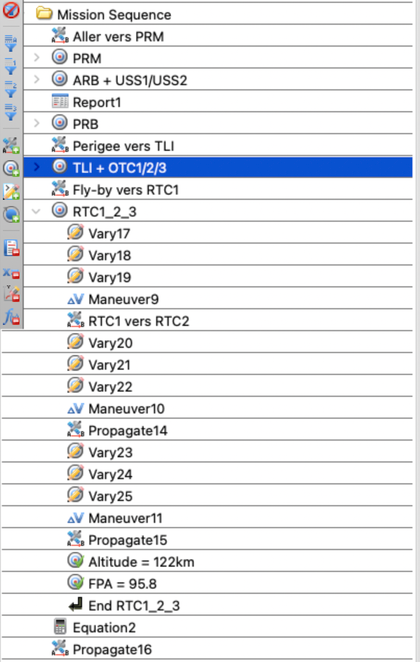
The course brief gave the planned Artemis II profile, from Orion's first Earth orbit to atmospheric entry, starting from NASA real-time telemetry. I modeled it step by step in GMAT. Raising the orbit, separating from the upper stage, leaving for the Moon, three course corrections on the way out, a lunar flyby, then three corrections on the way back. In the real flight, two of the three outbound corrections were canceled.
Targeting
Each phase is solved with the differential corrector, which adjusts a burn until the target is met. On the way out, the target is the flyby, 6,545 km above the lunar surface. On the way back, it is the entry into the atmosphere, 122 km up with a 95.8° flight path angle.
The same mission in the GMAT 3D view, screen recording. The return to Earth is sped up.
A mission to Minmus in KSP
Year 3 course project, Kerbal Space Program, team of 3
Mission
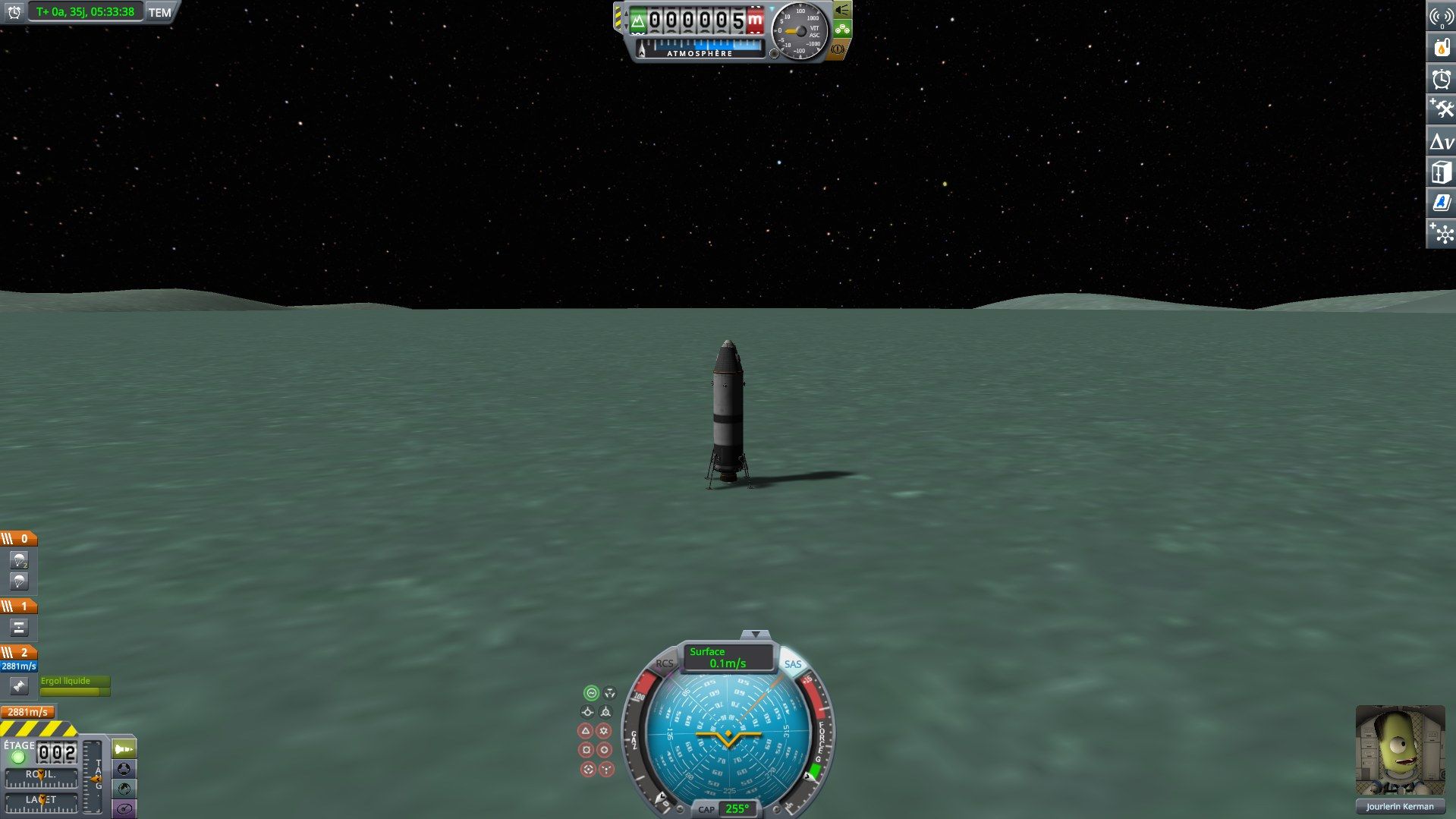
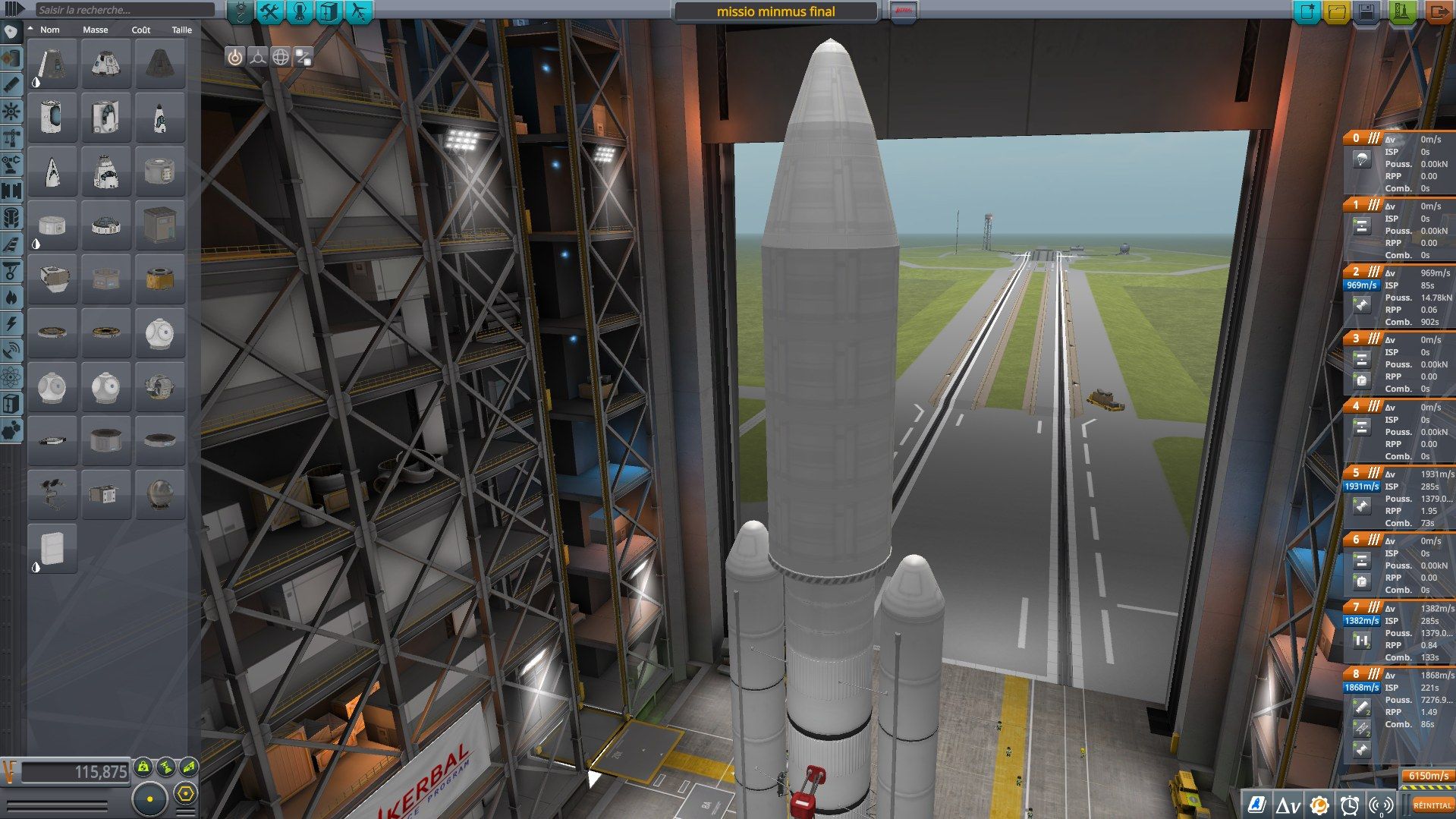
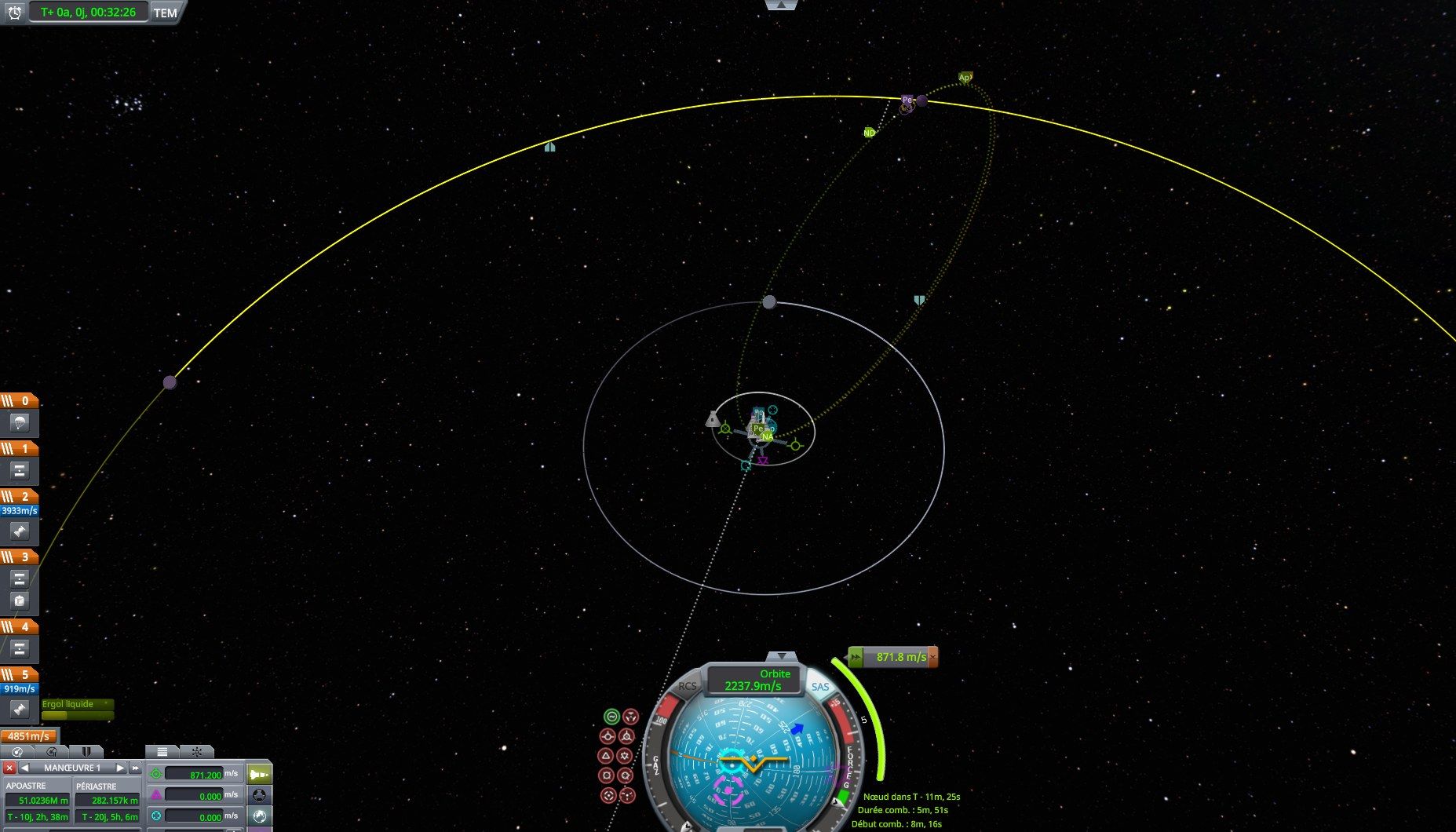
Our first space mission, in Kerbal Space Program. We designed a 92 t rocket with 7,542 m/s of delta-v and put it into orbit around Kerbin. We then transferred to Minmus with a plane change of about 6°, met a station in orbit by slowing down to zero relative velocity, landed on Minmus and flew back to Kerbin with no crew lost.
What it taught us
It was the first time we applied the orbital mechanics from class ourselves. Choosing a target, matching its orbital plane, planning the transfer, then the rendezvous. Looking back, the rocket was oversized, with too much delta-v margin, and the mission took a full in-game year. We would now size the rocket closer to what the mission needs.